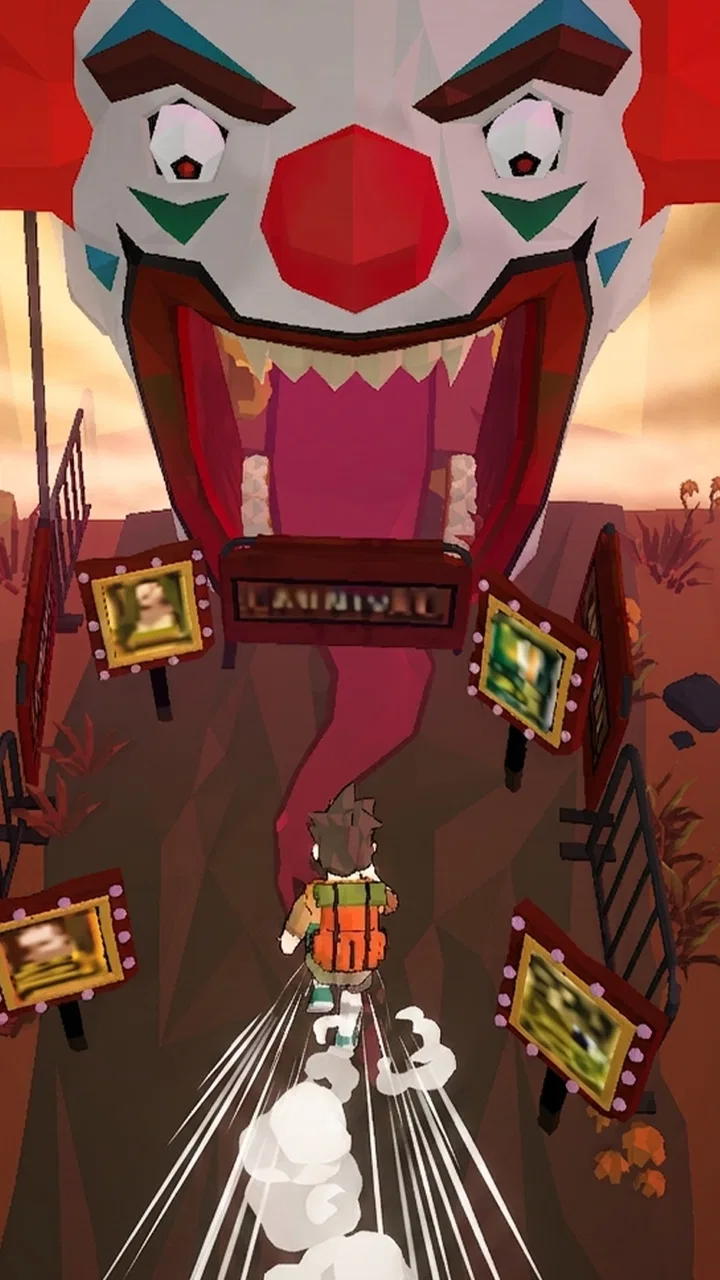
Upside Down
- 4.3
- Rating
- 10.00K
- Installs
- Free
- Price

 Analysis by App-foxy
I went into Upside Down expecting a compact role-playing adventure, but what stayed with me was its unusual sense of disorientation. The game puts Amy at the center of a mysterious rescue story and surrounds that objective with an action-focused world that feels built around uncertainty. You are not simply moving from one obvious task to the next; the appeal comes from trying to understand what is happening while dealing with the dangers in front of you.
That combination makes it easy to recommend to someone who enjoys story-led mobile games but wants more direct interaction than a purely passive narrative. At the same time, I would not describe it as a universal fit. Players looking for a deep character-building system, a long-form role-playing campaign, or a calm experience may find its action-adventure approach less satisfying. My impression is that its strongest quality is the way it turns a straightforward rescue goal into a reason to keep exploring.
A closer look at the current adventure
I’d use this section to focus on the practical rhythm of returning to the adventure: keeping Amy’s rescue as the main thread, then deciding whether a session is better spent acting quickly or taking time to read the strange surroundings. That simple choice helps me avoid turning the mystery into a blur of hurried encounters. The next section looks at the small habits and settings that can make that rhythm easier to maintain.
You May Also Like

 AccuWeather: Weather Radar
AccuWeather Review: A Quick, Clear Forecast for Everyday Decisions
For everyday plans, the best forecast is the one you can understand quickly. AccuWeather makes rain timing, radar, and local conditions easy to act on, with a few trade-offs.

 Hill Climb Racing
Why Hill Climb Racing Still Turns Crashes Into One More Run
A tiny car, a bumpy hill and one more upgrade: Hill Climb Racing keeps resurfacing because its simple chaos makes every near-miss feel personal.

 AliExpress - Shopping App
AliExpress Makes Global Shopping Feel Personal, but Shoppers Bear the Risk
AliExpress turns a global marketplace into a pocket-sized discovery engine. Its reach is useful, its shopping loop compelling, and its trade-offs easy to miss.

 Lords Mobile: Kingdom Wars
Lords Mobile Is a Kingdom-Building Routine, Not a Quick Match
A case-by-case verdict on the building, battles, device demands, and social commitments that make Lords Mobile rewarding for some players and exhausting for others.

 PDF Scanner app - TapScanner
TapScanner Makes Paperwork Easier to Capture, Check, and Share
TapScanner makes scanning with a phone feel less like a rescue operation and more like a dependable step in getting work done. Its capture tools are useful, though not flawless.

 Block Blast!
 Shows How Much a Puzzle Game Can Leave Out
A quiet grid game shows why puzzle players increasingly value instant clarity, repeatable skill and low-pressure play—and where the genre still needs to catch up.
More From Our News Desk
View All News


The central hook is simple, but the mood does the heavier work
The starting idea is clear: Amy needs to be rescued, and the world around her is mysterious enough to make that goal feel urgent. What I liked is that the game does not need a complicated premise to give the player direction. The rescue objective gives each encounter a purpose, while the “upside down” identity suggests that normal expectations may not apply.
That matters on a phone because mobile sessions are often interrupted. I can imagine opening the game during a short break, remembering the broad objective immediately, and getting back into the action without needing to reconstruct a huge web of political factions or character histories. The story provides a reason to continue, but it does not feel like homework before the game becomes playable.
The action-adventure structure also gives the experience a different rhythm from many conventional role-playing games. Instead of relying only on menus, equipment screens, or long conversations, the game asks me to stay alert to what is happening in the world. That makes it a better choice for players who want their progress to come from active play rather than from constantly comparing statistics.
What the role-playing label means here
I would approach the role-playing label with the right expectations. This is not the kind of game I would choose primarily for elaborate party management or a spreadsheet-like build system. Its role-playing appeal comes more from inhabiting the adventure, following Amy’s situation, and feeling that my actions are part of a larger mystery.
That distinction is useful before downloading it. If your favorite mobile RPG is built around collecting a large cast, arranging precise team combinations, and optimizing every upgrade, you may find this experience comparatively light. If you prefer a focused protagonist, a clear personal objective, and an action setting that can be understood quickly, the balance is more inviting.
I also found that the mysterious framing works best when I resisted the urge to rush through every moment. Looking around, noticing how the environment presents danger, and treating unusual situations as clues makes the game feel more coherent. A player who only wants to sprint from one marker to the next may still enjoy the action, but will probably miss some of the atmosphere that gives the adventure its identity.
How I would use it in an ordinary day
For a realistic everyday session, I would play it in two stages. During a short commute or waiting period, I would use the game for immediate action and a small piece of progress. Later, when I had more uninterrupted time, I would return to the story and explore more carefully. That approach suits a game whose main attraction is the combination of movement, danger, and mystery rather than endless background management.
It is also a useful way to avoid one common mobile-game frustration: losing track of why a task matters. I would keep the rescue objective in mind and treat each new area as part of that investigation. If a section felt confusing, I would slow down instead of repeatedly making random attempts. In a game with an intentionally strange setting, confusion can be part of the design, but it is more enjoyable when approached as a question to solve rather than as a reason to tap impatiently.
My practical advice is to begin with sound available if your surroundings allow it. The story and setting benefit from atmosphere, and playing silently can make the world feel flatter. I would also avoid judging the game after only a few hurried minutes. Its identity depends on the relationship between the rescue plot and the unusual world, so it needs enough attention for that relationship to register.
What has changed and what the current version tells me
The game was released on January 13, 2025, and the current version is 1.10.0. That places it in a relatively early stage of its life, which is important when deciding how to interpret the experience. I see the current build as a snapshot of a young adventure rather than a finished, long-established role-playing platform with years of accumulated systems.
For existing players, a numbered update such as this is encouraging because it shows that the project has already moved beyond its initial release. However, I would separate that evidence from assumptions about future content. A version number confirms that the game has evolved through updates; it does not, by itself, promise a particular feature, story expansion, or technical improvement next.
That distinction affects how I would recommend it. If you enjoy joining a developing game and seeing how its identity grows, the current version may be appealing. If you need a completely settled experience with every major system already expanded and refined, I would be more cautious and would treat the present adventure on its own terms.
The developer, Supercent, Inc., has positioned this as an accessible mobile title rather than an intimidating specialist RPG. The game is free to start, and its content rating is Everyone, which makes it easier to suggest for a broad household audience. Free entry is particularly useful here because the unusual premise may not be easy to judge from a short description alone.
Where the free model helps and where it asks for attention
Although the initial price is free, in-app purchases range from $0.99 to $99.99 per item. I would keep that in mind before settling into a long session. The broad range means the game should be approached with a personal spending limit, especially if you are the kind of player who enjoys convenience purchases when progress slows or a difficult section becomes tempting to bypass.
My preferred approach would be to play without spending at first and decide whether the core rescue journey is enjoyable on its own. That gives the game a fair test and prevents the purchase system from shaping my first impression. If I eventually wanted to support the experience or buy something useful, I would make that decision deliberately rather than treating every offer as part of the normal cost of playing.
This is also where the game may be less suitable for children playing without supervision. The Everyone rating describes broad content suitability, but it does not remove the need for adults to discuss purchases on a device that allows them. For an adult player, the same point is simply a budgeting issue: free access is a genuine advantage, but the optional purchase range deserves awareness.
How it feels for someone already playing
For a new player, the biggest benefit is clarity of purpose. Amy’s rescue gives the journey a human center, while the strange world creates questions that encourage forward movement. You do not need to begin by learning a giant collection of characters or mastering an intimidating set of menus.
For someone who started near release, the current build may feel more like a continuation of an evolving project than a completely different game. The version history suggests progress, but I would not assume that every personal complaint has been addressed simply because the number has changed. The right test is whether the current play loop feels smoother and more engaging for you now, not whether the update label sounds substantial.
If you stopped playing earlier, I would return with modest expectations and focus on the opening flow, the handling of action, and the way the mystery is presented. Those are the parts most likely to determine whether the game has become a better fit for your taste. I would not reinstall solely because of the version number; I would reinstall if the concept of rescuing Amy in a disorienting adventure still appeals to me.
Useful habits for getting more from the mystery
One non-obvious strength is that the game rewards a change in mindset. I would not treat every strange detail as decoration. When the setting feels “wrong,” I would pause and ask whether the unusual presentation is guiding my attention toward a threat, a route, or a story clue. This does not mean inventing elaborate theories for every visual detail; it means playing with curiosity instead of treating the world as a corridor between fights.
A second useful habit is to separate exploration decisions from action decisions. When I am in immediate danger, I focus on surviving the encounter. Once the pressure drops, I look again at the surroundings and reconsider where the story may be pointing. Mixing those two tasks can make the game feel more chaotic than it needs to be, while switching deliberately between them makes the adventure easier to read.
A third trade-off concerns pacing. Rushing may be efficient, but it can weaken the very atmosphere that distinguishes this title from a routine action game. Exploring every corner may be rewarding for a curious player, yet it can also become tiring if I am only trying to reach the next story beat. I would use a flexible rule: investigate when the environment suggests something unusual, but move on when repeated searching stops producing meaningful progress.
Finally, I would judge purchases by whether they improve my enjoyment rather than by whether they make the game faster. In a mystery-driven adventure, skipping friction can sometimes remove the process that makes the rescue feel earned. That does not make every convenience purchase bad, but it does mean that spending can change the balance between discovery and acceleration.
Where it still feels limited
The main limitation is the risk of a mismatch between the game’s label and a player’s expectations. Calling it a role-playing game may lead some people to expect extensive progression, deep customization, or a large social layer. My experience is better represented by “story-focused action adventure with role-playing elements.” Anyone seeking a complex build-crafting hobby should compare it with a more system-heavy alternative before committing time.
The mysterious setting can also create friction. Atmosphere is valuable, but ambiguity may feel like a lack of direction when I am tired or playing in short bursts. A player who prefers explicit objectives and constant explanation may need patience. The same quality that makes the world intriguing can make it harder to understand at first.
There is another practical limitation in the free-to-play structure. Even when the core experience is enjoyable, the presence of purchases can make me more conscious of pacing and progression. That awareness is not unique to this game, but it matters here because the title works best when I am absorbed in the rescue story. Anything that pulls my attention toward spending can weaken that immersion.
I would also skip it if I wanted a purely relaxing game. The setting and action suggest that attention is part of the experience. For a quiet bedtime session, a slower puzzle game or a gentle narrative title may be a better choice. Upside Down is more appropriate when I want to participate actively and accept a little uncertainty.
Device fit and who should try it
The game supports devices running Android 9 or later. That gives it a reasonably broad starting point for Android users, although the actual comfort of play will still depend on the particular phone or tablet, screen size, and how well the device handles the game in practice. I would especially prefer a larger screen if I wanted to read the story comfortably and inspect the world without feeling cramped.
With an average rating of 4.3 from around 1.4 thousand ratings, the reception is positive enough to make the game worth investigating, while the total of over 10 thousand installs suggests that it has found an initial audience without being presented as a massive mainstream hit. I read those figures as a reason to try the free entry point, not as proof that it will suit every player.
The game is best for someone who wants a compact, unusual adventure with a clear emotional objective. It is also a good candidate for players who enjoy discovering how a world works instead of receiving every answer immediately. Families can consider it because of the Everyone rating, while adults should still handle purchase controls sensibly.
I would point dedicated RPG optimizers elsewhere. If your enjoyment depends on highly detailed statistics, extensive team composition, or a long list of endgame activities, this may feel too focused on its story and action identity. Likewise, players who dislike uncertainty may prefer a more transparent adventure with clearer navigation and less emphasis on mystery.
What I would watch as the game develops
Because the current version is 1.10.0 and the release is recent, I would watch how Supercent, Inc. balances new material with refinement. The most meaningful progress would be improvements that make the rescue story easier to follow without removing its strange atmosphere. I would also value updates that make action feel more consistent and preserve the sense of discovery rather than turning the game into a routine sequence of tasks.
I would pay attention to whether future development deepens Amy’s role instead of merely extending the map. The rescue premise is the emotional anchor, so additional places or encounters will matter most when they reveal something meaningful about her situation. More content alone would not necessarily improve the experience; better connection between action and story would.
For players already invested, the key question is whether updates respect the original mood. A game called Upside Down should feel unusual, but unusual design needs enough clarity to remain enjoyable. I would welcome evolution that adds context, improves the flow, and gives returning players reasons to explore again without making newcomers feel lost.
My recommendation after playing
Upside Down is worth trying if you want a free role-playing adventure that places a rescue story inside an intentionally strange action world. I like that it has a clear purpose without presenting itself as another enormous mobile RPG to manage every day. The best moments come when I let the setting make me curious and allow the mystery to shape how I move through the adventure.
My recommendation is more measured for players with very specific expectations. Do not choose it for a deep statistical progression system, a completely predictable route, or a relaxing game that asks little concentration. Choose it because Amy’s rescue gives you a reason to care, and because the upside-down atmosphere makes ordinary adventure-game habits feel less reliable.
The free starting point makes the decision easy: install it, play attentively, and see whether the action and mystery work together for you before considering any purchase. I would keep spending optional, treat the current version as an evolving chapter rather than a promise of what comes next, and give the game enough time to show its personality. For the right player, that personality is the reason to stay.
FAQs for Upside Down
01What is Upside Down and how does the game work?
Upside Down is a casual puzzle game built around changing the direction or orientation of the playfield to solve challenges. Instead of relying only on traditional movement, you must think about how gravity, paths, obstacles, and timing change when the screen is reversed. The early levels are easy to understand, but later stages require careful planning, quick reactions, and experimentation to discover the correct solution.
02Is Upside Down free to download and play?
Upside Down can generally be downloaded for free, allowing players to try the main gameplay without paying upfront. However, depending on the version available for your Android or iOS device, the game may include advertisements, optional in-app purchases, or extra content that requires payment. Before downloading, it is worth checking the store listing for details about pricing, advertising, and whether any features are locked behind purchases.
03Does Upside Down require an internet connection?
The core gameplay of Upside Down is designed to be straightforward and suitable for short play sessions, so many levels may work without a constant internet connection. Nevertheless, online access can still be required for advertisements, updates, cloud features, analytics, or restoring purchases. If you plan to play while traveling or without mobile data, test the game offline first because requirements can vary between versions and devices.
04Is Upside Down suitable for children and casual players?
Upside Down is generally approachable for casual players because its controls and basic concept can be learned quickly. The main challenge comes from understanding the changing perspective rather than from complicated controls. Parents should still review the age rating and privacy information on the relevant app store, especially if children will use the app, since advertising, optional purchases, and difficulty may differ depending on the release.
05What devices are compatible with Upside Down, and does it run smoothly?
Compatibility depends on the specific Upside Down release, operating system version, and developer requirements listed on Google Play or the App Store. On a reasonably modern Android phone or iPhone, the game should provide a smooth experience with responsive controls and quick loading. Older devices may experience reduced performance, crashes, or limited support, so check the store page for the minimum requirements before installing.
Pros
- Creative upside-down perspective makes ordinary scenes feel fresh.
- Simple controls are easy to learn for new players.
- Short levels fit well into quick gaming sessions.
- Visual design is distinctive and memorable.
- Increasing challenges keep the gameplay engaging over time.
Cons
- Some puzzles may feel confusing without clear guidance.
- Progress can become repetitive after extended play.
- Limited content may reduce long-term replay value.
- Certain levels rely heavily on trial and error.
- Performance may vary on older smartphones.

Upside Down
Gallery